$5.99 flat-rate shipping on 1–3 retail packs · Free standard shipping on 4+ · Mix & match
How Gator Eyes started

Five friends. A stack of ideas. One little light that made the cut.

Gator Eyes grew from a group of hunting friends who kept coming up with practical gear ideas, then did the less glamorous work of prototyping and manufacturing one of them. Years later, the product is still built around the same constraint: stay small enough to be where a larger flashlight is not.

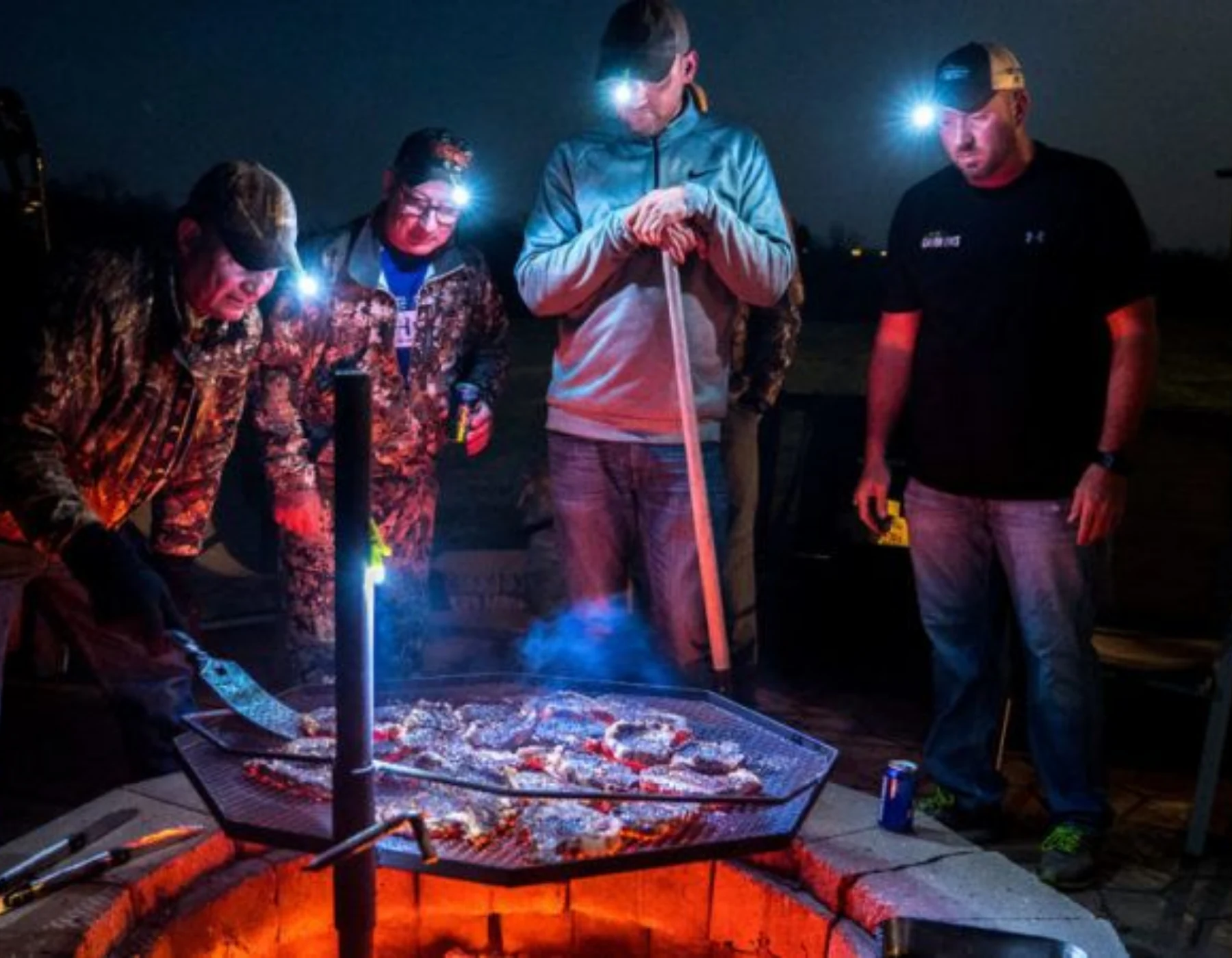
Gator Eyes lights in use during an outdoor gathering
The beginning

The idea did not begin as “let's make another flashlight.”

There were five friends in the original group, and hunting trips gave them plenty of time to talk about small product ideas that might solve real outdoor problems. Eventually they put several of those ideas on the table and committed their own money, contacts, effort, and risk to finding out which ideas were actually worth building.

Several ideas were considered. Some were interesting but too expensive or complicated to launch. Gator Eyes stood out because prototyping was realistic, the outdoor problem was familiar, and the basic idea was easy to understand: a very small LED light that could hold itself in place with a clip or magnet.

That became the product worth pursuing—not because it was the biggest idea, but because it solved a surprisingly common little problem.

From idea to product

The development story is really a story about what not to add.

01

Start with the problem

Full-size flashlights are useful, but they are not always near the task, and they usually occupy one hand. The group wanted a light small enough to keep in a pack, tackle box, vehicle, or gear bin—and simple enough to leave there.

02

Work through prototypes

The team worked through manufacturing, logistics, prototypes, and revisions rather than stopping at the idea. The clip, magnet, switch, battery, and compact body had to work together without turning the product into another bulky flashlight.

03

Try the obvious improvement

Replaceable batteries sounded like an obvious upgrade. The problem was physical: access doors, battery hardware, and the room needed to service the battery kept making the light larger. Multiple refinements led back to the same conclusion—the bigger version no longer solved the original problem.

04

Protect the reason it exists

The final decision was to keep Gator Eyes small, self-contained, and uncomplicated. That tradeoff is still the heart of the product today. It is not meant to win a specification contest. It is meant to be the light you can actually afford the space to keep where you need it.

What users taught the brand

The use cases grew faster than the product did.

Gator Eyes came from hunting and fishing, but years of conversations with customers kept widening the map. Mountain hunters wanted a tiny backup because every ounce in a pack mattered. Other people wanted one in a glove box, tackle tray, garage, camper, toolbox, storm kit, or kitchen drawer.

The repeated objection was also revealing: “I already have a flashlight.” Exactly. Gator Eyes are not built around the idea that people need to replace a good flashlight. They are built around the fact that the good flashlight is often somewhere else, too big for the little job, or taking up the hand you need.

That is why the brand now talks as much about placement as brightness. A useful light that is already beside the breaker panel can be more helpful in that moment than a much larger light across the house.

The core lesson
Do not turn the little backup light into the big flashlight it was designed to complement.

That principle explains the size, the clip, the magnet, the five-pack, and the “keep one everywhere” mentality better than any list of features.

Why Small Was Intentional
More of the story

Common questions about the product's origin.

Was Gator Eyes originally a household product?

No. The roots are firmly outdoors. The original group hunted and fished, so the first problems and use cases came from packs, blinds, boats, vehicles, and field work. The household angle became obvious later because the same “small light in the exact place you need it” problem exists around breaker panels, garages, drawers, basements, campers, and emergency kits.

Why did the founders keep the product so simple?

Because every additional mechanism has a cost in size, weight, complexity, or maintenance. The team tried different ways to make the battery replaceable and kept running into the same problem: the product got too big and stopped being the thing they were trying to make. Simplicity became a deliberate design choice rather than a missing feature.

What is Gator Eyes supposed to replace?

Nothing. Keep your primary flashlight. Keep your headlamp. Keep the lantern in your storm kit. Gator Eyes fill the smaller jobs around those tools: hands-free close work, quick checks, point-of-need lighting, marking, and backup light in places where you would not normally store a larger flashlight.

Why a five-pack instead of one light?

Because the product gets more useful when it stops moving around. One can live in the truck, one by the breaker panel, one in the tackle box, one in the garage, and one in the camp or hunting gear. The five-pack turns “Where did I leave my flashlight?” into “There is already a light here.”

Same idea today

Clip it. Stick it. Stash it.

The product has found a lot more jobs since the first prototype, but the design brief has not really changed.

End of useful life

Used it up? Recycle it right.

Gator Eyes contain sealed, non-replaceable LR41 alkaline button cells. Leave the light intact and use a battery/electronics, retailer take-back, or local collection program that confirms it accepts the complete device. Local requirements vary.

Gator Eyes Recycling Guide